
custom glass fabrication
How to Close the Water Valve A Step-by-Step Guide Closing a water valve is a crucial skill for homeowners and renters alike. Whether you are tackling a plumbing issue, preparing for maintenance, or simply trying to conserve water, knowing how to properly shut off your water supply is essential. This article will guide you through the steps necessary to close a water valve safely and effectively. Why You Might Need to Close the Water Valve There are several scenarios in which you may need to close your water valve. Common reasons include 1. Plumbing Repairs If you are fixing a leaky faucet, changing out a toilet, or repairing pipes, it’s important to close the valve to prevent water from flowing and creating a mess. 2. Emergencies In the event of a burst pipe or severe leak, turning off the water can help minimize damage to your home. 3. Seasonal Maintenance For those living in colder climates, it may be necessary to shut off the water to outdoor faucets to prevent freezing and cracking during winter. Identifying Your Water Valves Before you can close a water valve, you need to know where they are located. There are usually two types of valves in a typical household 1. Main Shut-off Valve This valve controls the water supply to your entire home. It is typically located near the water meter or where the main water line enters your house. 2. Individual Shut-off Valves These valves control the water supply to specific fixtures, such as sinks, toilets, and appliances. They are usually located close to the fixture they serve. Step-by-Step Instructions to Close the Water Valve Now that you are familiar with the types of valves, here is how to close them how to close the water valve 1. Gather Necessary Tools You may not need any tools for most valves since they can often be operated by hand. However, having a wrench or pliers nearby can be helpful for more stubborn valves. 2. Locate the Valve Find the appropriate valve that you need to close. If it's the main shut-off valve, look for a round wheel or a lever. For individual fixtures, check under the sink, behind the toilet, or near appliances. 3. Turn Off the Valve - For a Round Wheel Valve Turn the handle clockwise (right) to close it. You may need to use some force if it hasn’t been turned in a while. - For a Lever Valve Switch the lever 90 degrees to the right (or perpendicular to the pipe) to shut off the water. 4. Test the Valve Once closed, turn on a faucet connected to the same line to check if water is still running. If it stops, you've successfully closed the valve. 5. Address Any Issues If the valve is leaking or difficult to turn, you may need to consult a plumber to avoid any complications. Do not force a valve that is stuck, as this could cause damage. Conclusion Knowing how to close the water valve is an important home maintenance skill. Whether you are performing repairs, tackling leaks, or mobilizing for seasonal changes, securely shutting off your water supply helps protect your property, save water, and mitigate potential damage. Always remember to check your valves periodically to ensure they remain in good working condition. With these steps, you will be well-equipped to manage your water supply efficiently.
about
custom glass fabrication
Understanding Hole Gauges Precision Measuring Tools in Manufacturing Hole gauges, an integral part of the precision engineering and manufacturing world, play a crucial role in ensuring accuracy and consistency in various industrial processes. These specialized tools are designed to measure the diameter of holes, providing engineers and technicians with vital data for quality control and process optimization. A hole gauge, also known as a ring gauge, is essentially a cylindrical tool with an inner diameter that corresponds to the nominal size of the hole being measured. It functions by sliding over the hole; if it fits snugly, the hole's diameter is within acceptable limits. This simple yet effective mechanism ensures that components meet the strict tolerances required in industries such as aerospace, automotive, and machinery manufacturing. There are two primary types of hole gauges go gauges and no-go gauges. A 'go' gauge is used to verify if the hole is within the lower limit of the tolerance zone, while a 'no-go' gauge checks if it exceeds the upper limit. If the 'go' gauge fits through but the 'no-go' gauge doesn't, the hole diameter is considered acceptable. The precision of hole gauges lies in their manufacturing process. They are typically made from high-strength materials like stainless steel or carbon steel, hardened and ground to achieve exceptional dimensional stability and wear resistance. The tolerance on these gauges is often in the micrometer range, highlighting their importance in maintaining stringent standards The tolerance on these gauges is often in the micrometer range, highlighting their importance in maintaining stringent standards The tolerance on these gauges is often in the micrometer range, highlighting their importance in maintaining stringent standards The tolerance on these gauges is often in the micrometer range, highlighting their importance in maintaining stringent standards hole gauges . Hole gauges also come in different configurations. Plain hole gauges are used for simple cylindrical holes, while blind hole gauges are designed for measuring depths and diameters of blind holes. Specialized versions, like thread ring gauges, are used to check the quality of threads in a hole. The use of hole gauges extends beyond just checking dimensions. They are also instrumental in detecting inconsistencies, ovality, or deformation in holes, which could otherwise lead to assembly issues or failure of components. In this way, they serve as a preventive measure, saving time, resources, and potentially avoiding costly errors. In conclusion, hole gauges are indispensable tools in the realm of manufacturing and engineering. Their precision, durability, and versatility make them a staple in quality control processes. With ongoing advancements in materials and design, hole gauges continue to evolve, ensuring that the stringent demands of modern manufacturing are met with unwavering accuracy and reliability.
-

High quality industrial productsagement

High quality industrial products
View Details -

Meet the diverse needs of customers

Meet the diverse needs of customers
View Details -

Strict quality control

Strict quality control
View Details -

Top raw materials

Top raw materials
View Details -

Trusted supplier

Trusted supplier
View Details
Our application


news and information
Using a Small Hole Gauge for Accurate Measurement in Precision Engineering Applications
The Importance of Small Hole Gauges in Precision Measurement In various industries, precision measur
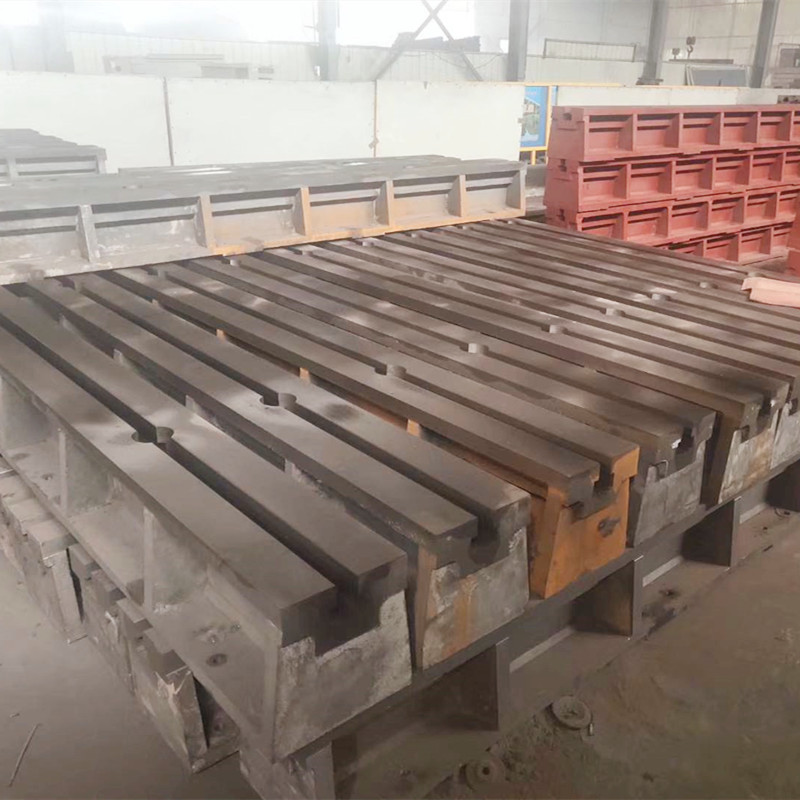
Versatile Welding Table Clamps for Efficient Work and Strong Joints in Metal Projects
Enhancing Your Welding Experience with 5% 208% Welding Table Clamps Welding is a precise art that re

Versatile 3x4 Welding Table for Efficient Metal Fabrication and Projects
The Versatility of a 3x4 Welding Table In any metalworking shop, the tools and work surfaces can sig
 English